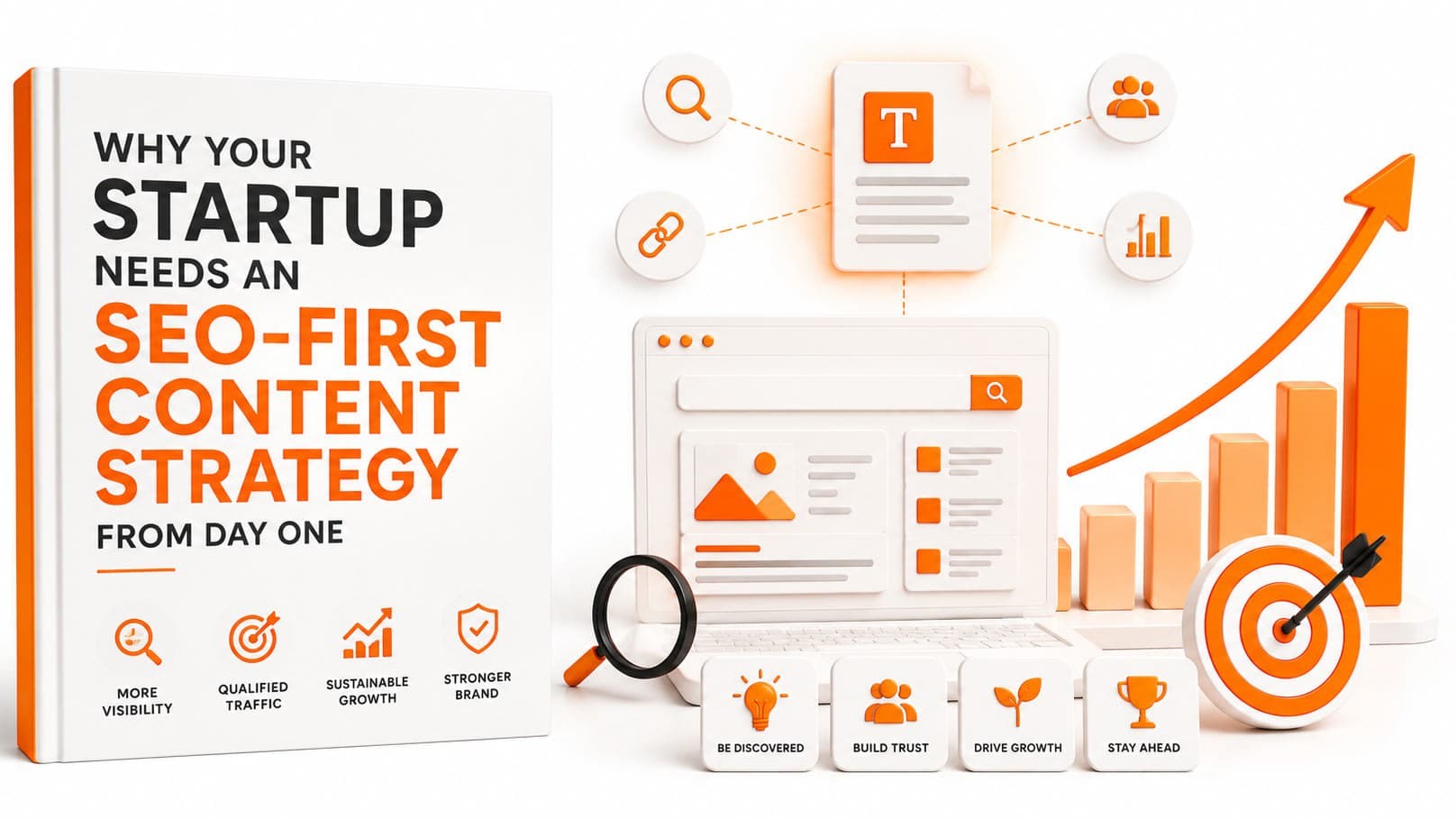
Why Your Startup Needs an SEO-First Content Strategy from Day One
MarketiXpert
08 Jun 2026 • 05 Mins read min read
Building a startup is a race against time and resources. Many founders prioritize product development, sales, and fundraising, often pushing content marketing to a later stage. However, neglecting an SEO-first content strategy from day one is a critical oversight that can hinder long-term growth and make future marketing efforts significantly harder and more expensive. This article will explain why integrating SEO into your content planning from the outset isn't just an option—it's a strategic imperative.
TL;DR
- Early Organic Growth: Establish domain authority and search visibility before competitors.
- Cost-Effective Lead Generation: Reduce reliance on expensive paid ads by attracting qualified organic traffic.
- Content-Market Fit: Align your content directly with user needs and search intent, validating product ideas.
- Scalable Foundation: Build a sustainable, compounding asset that delivers returns over time.
- Improved User Experience: Naturally create higher-quality, more relevant content for your audience.
The Compounding Power of Organic Search
Think of organic search as digital real estate. The earlier you start building, the more valuable your property becomes. For startups, this means accumulating domain authority and ranking for relevant keywords before your market gets saturated. When I've worked with early-stage companies, I often see a scramble for paid ads to drive initial traffic. While necessary for some traction, this becomes an unsustainable treadmill if not complemented by a robust SEO strategy. Every dollar spent on paid ads stops delivering value the moment you stop paying. Content, on the other hand, is an asset that compounds.
Consider this simplified ROI comparison over 12 months:
| Strategy | Month 1 (USD) | Month 6 (USD) | Month 12 (USD) | Cumulative Traffic (Est.) |
|---|---|---|---|---|
| Paid Ads | $5,000 / 500 | $5,000 / 500 | $5,000 / 500 | 6,000 visitors |
| SEO-First Content | $2,000 / 50 | $2,000 / 300 | $2,000 / 800 | 10,000 visitors (and growing) |
Assumes consistent spend and typical growth curves for each strategy.
The initial investment in SEO might seem slow to yield results, but its long-term benefits far outweigh the upfront patience required. This is why an SEO-first content strategy is non-negotiable.
Aligning Content with User Intent and Business Goals
An SEO-first approach forces you to think about what your target audience is actively searching for, not just what you want to tell them. This is critical for achieving content-market fit. As a full-stack developer, I build systems that solve real problems. Similarly, an SEO-first content strategy builds content that solves real information problems for your users.
For example, if you're building a Next.js component library, your audience might be searching for:
- "Next.js UI library comparison"
- "How to build accessible React components"
- "Tailwind CSS vs Styled Components in Next.js"
- "Best practices for Next.js performance optimization"
By creating high-quality content around these topics, you not only attract developers actively looking for solutions but also establish your brand as an authority. This isn't just about traffic; it's about attracting the right traffic—qualified leads who are already interested in what you offer. When I consult with clients on AI/LLM integration, for instance, a common mistake is creating content that’s too broad or too niche without considering the actual search landscape.
Building a Technical Foundation for SEO Success
As a developer, I understand that good architecture underpins everything. The same applies to SEO. An SEO-first approach means considering technical SEO elements from the very beginning of your website's development.
This includes:
- Site Structure: Logical hierarchy, clear navigation paths, and internal linking strategies.
- Page Speed: Optimized images, efficient code, and leveraging CDNs (e.g., Vercel's edge network for Next.js).
- Mobile Responsiveness: A flawless experience on all devices.
- Schema Markup: Structured data to help search engines understand your content better (e.g.,
Articleschema for blog posts,FAQPageschema for your FAQ sections). - Core Web Vitals: Optimizing for Largest Contentful Paint (LCP), Cumulative Layout Shift (CLS), and First Input Delay (FID).
When I'm building a Next.js application, I integrate these considerations directly into the development workflow. For example, ensuring proper next/image usage for image optimization or configuring server-side rendering (SSR) or static site generation (SSG) correctly for initial page load performance.
// Example of a basic SEO component in Next.js
import Head from 'next/head';

interface SeoProps {
  title: string;
  description: string;
  canonicalUrl?: string;
}

const Seo: React.FC<SeoProps> = ({ title, description, canonicalUrl }) => {
  return (
    <Head>
      <title>{title}</title>
      <meta name="description" content={description} />
      {canonicalUrl && <link rel="canonical" href={canonicalUrl} />}
      <meta property="og:title" content={title} />
      <meta property="og:description" content={description} />
      <meta property="og:type" content="article" />
      {/* Add more Open Graph and Twitter card meta tags as needed */}
    </Head>
  );
};

export default Seo;
This snippet shows how simple it can be to integrate SEO elements at a component level in a modern web framework like Next.js, ensuring that every page or article you publish is technically sound from an SEO perspective. This level of attention to detail is what sets successful startups apart.
Future-Proofing Your Marketing Efforts
An SEO-first content strategy isn't just about immediate gains; it's about building a sustainable, long-term marketing engine. Search algorithms evolve, but the core principle of delivering valuable, relevant content to users remains constant. By focusing on user intent and high-quality production, you naturally adapt to algorithm updates and build a resilient online presence.
Consider the global reach. A well-optimized piece of content can attract users from the US, Canada, UK, and India simultaneously, expanding your potential market without additional ad spend. For instance, a technical guide on "DevOps best practices for Node.js microservices" resonates with developers and CTOs worldwide, bringing in traffic and potential leads regardless of their geographical location. This global appeal translates into real business opportunities, whether it's a consulting engagement from London or a full-stack development project from Bangalore.
FAQ
Q: Is SEO still relevant for new startups in 2025?
A: Absolutely. SEO is more relevant than ever. While competition is high, the principles of creating high-quality, user-focused content, backed by solid technical SEO, continue to be the most cost-effective way to build long-term organic visibility and attract qualified leads.
Q: How much should a startup budget for SEO content?
A: The budget varies greatly, but even a small, consistent investment (e.g., $1,000 - $3,000 USD/month for content creation and basic technical audits) can yield significant returns over time. Focus on quality over quantity initially, and scale as you see results.
Q: Can I do SEO myself, or do I need to hire an expert?
A: Founders can lay the groundwork by understanding keyword research and basic on-page SEO. However, for a comprehensive strategy, technical SEO implementation, and ongoing optimization, partnering with an expert (freelance or agency) is often more efficient and effective, especially for complex topics like AI/LLM integration or advanced web development.
Q: How long does it take to see results from an SEO-first strategy?
A: SEO is a long-term game. You might start seeing initial improvements in 3-6 months, with significant organic traffic growth typically taking 6-12 months or more. Consistency and patience are key.
Final thoughts
Ignoring an SEO-first content strategy from day one is like building a house without a solid foundation. It might stand for a while, but it will eventually crack under pressure. For startups, integrating SEO into your content planning isn't just a marketing tactic; it's a strategic investment in your future. It ensures that every piece of content you create works harder for you, bringing in qualified leads and building authority that compounds over time.
If you're building a groundbreaking product and need to ensure your message reaches the right audience through a robust, SEO-optimized technical content strategy, let's talk. I bring a unique blend of senior engineering expertise and strategic content insights to help startups like yours thrive in competitive digital landscapes.
Building a Winning Startup Culture: A Founder's Guide
Building a startup is a marathon, not a sprint, and the culture you cultivate is the engine that powers your team through every mile. As founders, we're often so focused on product-market fit, funding...
From Zero to Traction: A Founder's Guide to Startup SEO in 90 Days
Starting a new venture is exhilarating, but gaining initial visibility often feels like shouting into a void. For many founders, a robust online presence is non-negotiable, and that means mastering **...