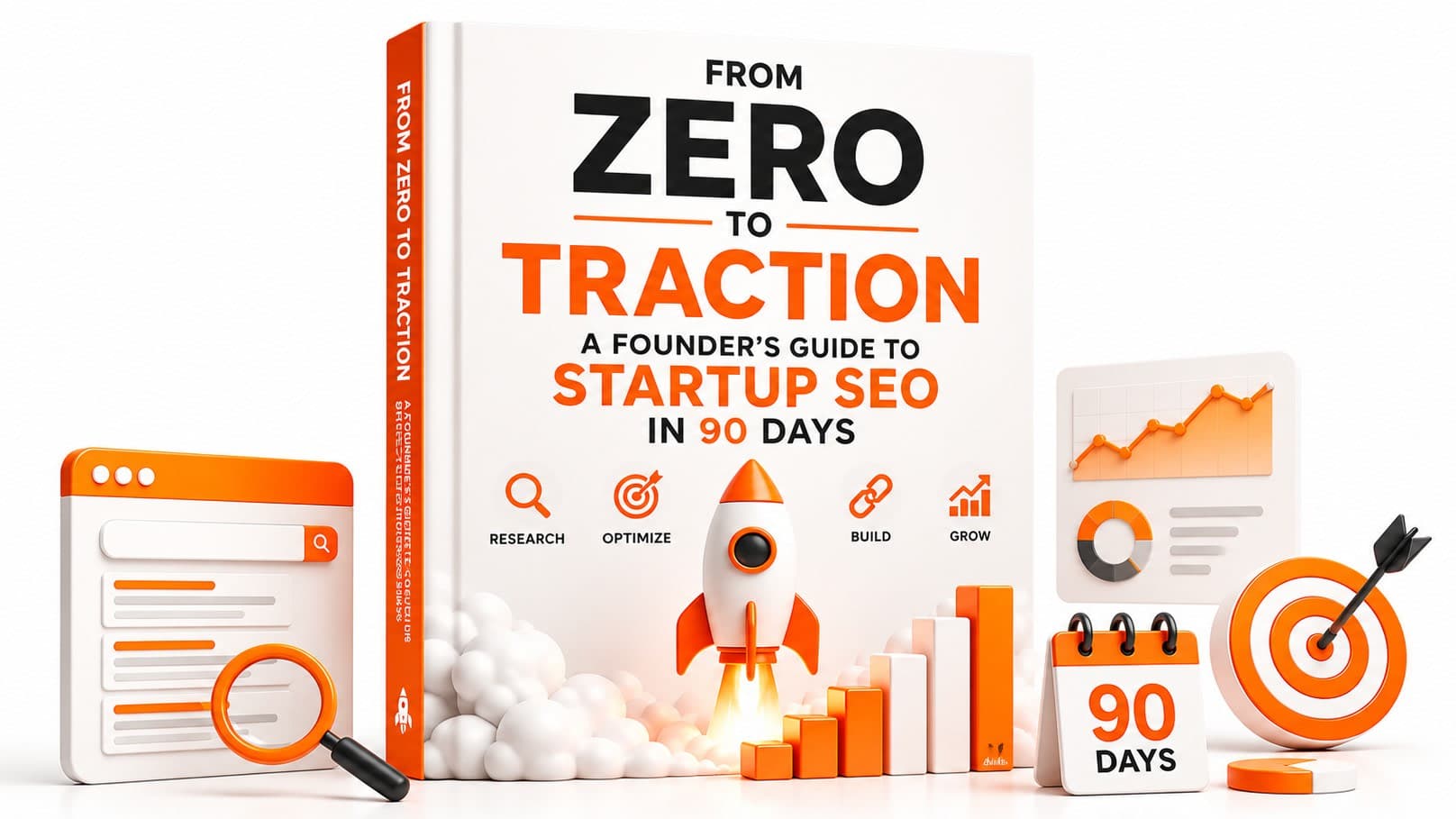
From Zero to Traction: A Founder's Guide to Startup SEO in 90 Days
Smit Parkeh
08 Jun 2026 • 06 Mins read min read
Starting a new venture is exhilarating, but gaining initial visibility often feels like shouting into a void. For many founders, a robust online presence is non-negotiable, and that means mastering startup SEO. This guide cuts through the noise, offering a practical, 90-day roadmap to build search traction, attract qualified leads, and establish your brand's digital footprint without a massive marketing budget.
TL;DR
- Weeks 1-3: Foundational research (keywords, competitors) and technical SEO setup.
- Weeks 4-6: Content strategy and initial content creation focusing on problem-solution.
- Weeks 7-9: Link building outreach and local SEO optimization (if applicable).
- Weeks 10-12: Performance monitoring, refinement, and scaling efforts.
- Key takeaway: Consistent, data-driven execution trumps sporadic, reactive tactics.
Phase 1: The Foundation (Weeks 1-3)
Before you write a single line of content, you need to understand your battleground. This phase is about meticulous research and setting up your technical bedrock.
Week 1: Keyword & Competitor Research
This isn't just about finding high-volume keywords; it's about identifying high-intent keywords that align with your product's solutions. Think like your ideal customer. What problems are they typing into Google? What solutions are they looking for?
- Brainstorm seed keywords: Start with core terms related to your product or service. If you're building an AI-powered project management tool, think "AI project management," "LLM task automation," "startup productivity tools."
- Competitor analysis: Identify your top 3-5 direct and indirect competitors. Use tools (Ahrefs, SEMrush, Moz) to see what keywords they rank for, their top-performing content, and their backlink profiles. This provides a blueprint and reveals gaps.
- Long-tail keyword discovery: These are longer, more specific phrases (e.g., "how to integrate ChatGPT with Trello"). They have lower search volume but higher conversion rates due to clear user intent. They're also easier to rank for initially.
- Keyword mapping: Assign primary and secondary keywords to potential content topics. This ensures every piece of content serves a strategic purpose.
Week 2: Technical SEO Audit & Setup
Your site's technical health dictates how easily search engines can crawl, index, and understand your content. Even a great content strategy will fail if your site has technical issues.
- Google Search Console & Bing Webmaster Tools: Set these up immediately. Verify your site, submit your sitemap, and monitor for crawl errors or manual actions. This is your direct line to search engines.
- Robots.txt & Sitemap.xml: Ensure your
robots.txtisn't blocking essential pages and that yoursitemap.xmlincludes all important URLs and is up-to-date. - Site speed (Core Web Vitals): Optimize for fast loading times. Use Google PageSpeed Insights. Focus on server response time, image optimization, and render-blocking resources. As a full-stack engineer, I often see slow database queries or unoptimized asset loading as culprits.
- Mobile-friendliness: Your site must be responsive and provide a good user experience on all devices. Google's Mobile-Friendly Test can help.
- Schema Markup: Implement structured data (e.g., for products, services, FAQs) to help search engines understand your content better and potentially earn rich snippets. For a SaaS product,
Productschema is crucial. - HTTPS: Ensure your site uses HTTPS. It's a non-negotiable ranking factor and essential for user trust.
{
  "@context": "https://schema.org",
  "@type": "Product",
  "name": "Your Startup Product Name",
  "description": "A brief description of what your product does and its value.",
  "url": "https://yourstartup.com/product-page",
  "brand": {
    "@type": "Brand",
    "name": "Your Startup Name"
  },
  "offers": {
    "@type": "Offer",
    "priceCurrency": "USD",
    "price": "99.00",
    "itemCondition": "https://schema.org/NewCondition",
    "availability": "https://schema.org/InStock"
  },
  "aggregateRating": {
    "@type": "AggregateRating",
    "ratingValue": "4.8",
    "reviewCount": "150"
  }
}
Week 3: On-Page SEO Essentials
This is where you optimize individual pages for target keywords.
- Title Tags & Meta Descriptions: Craft compelling, keyword-rich title tags (50-60 characters) and meta descriptions (150-160 characters) for every key page. These influence click-through rates (CTR).
- Header Tags (H1, H2, H3): Use H1 for your main page title (only one per page). Use H2s for main sections, and H3s for sub-sections. Incorporate keywords naturally.
- Content Quality & Length: Focus on creating comprehensive, valuable content that fully addresses user intent. Longer content (1000+ words) often performs better for informational queries if it's high quality.
- Image Optimization: Use descriptive filenames, alt text, and compress images for faster loading.
- Internal Linking: Link relevant pages within your site. This helps distribute link equity and guides users and search engine crawlers. For example, link from a blog post about "Next.js performance" to your services page on Next.js development.
Phase 2: Content & Authority Building (Weeks 4-9)
Now that your foundation is solid, it's time to build out your content and start earning credibility.
Weeks 4-6: Strategic Content Creation
Your content should be a resource hub for your target audience, solving their problems and answering their questions.
- Blog Strategy: Develop a content calendar based on your keyword research. Prioritize "pillar content" (long, comprehensive guides) and supporting "cluster content" (shorter posts linking back to the pillar).
- Problem-Solution Focus: Each piece of content should clearly identify a problem your audience faces and offer a solution, ideally one where your product/service plays a role. For example, if you offer AI integration, write about common LLM challenges and how they're overcome.
- Content Formats: Vary your content. Blog posts, how-to guides, case studies, infographics, and video transcripts all serve different purposes and engage different users. As a full-stack developer, I've seen technical deep-dives and comparison articles (e.g., "React vs. Next.js for startups") perform exceptionally well.
- Regular Publishing: Aim for consistency. Even one high-quality post per week is better than sporadic bursts.
Weeks 7-9: Link Building & Local SEO
Backlinks are still a critical ranking factor, acting as votes of confidence from other websites. If your business has a physical location or serves a specific geographic area, local SEO is also vital.
- Guest Blogging: Write for other relevant industry blogs. This gets your brand in front of a new audience and earns valuable backlinks. Focus on high-authority sites.
- Broken Link Building: Find broken links on reputable websites, then offer your content as a replacement. This is a white-hat tactic that often yields results.
- Resource Page Link Building: Identify websites that curate resource lists and suggest your relevant content for inclusion.
- Unlinked Mentions: Use tools to find mentions of your brand online that don't link back to your site. Reach out and ask for a link.
- Local SEO (if applicable):
- Google My Business: Claim and optimize your GMB profile. Include accurate business information, photos, and encourage reviews.
- Local Citations: Ensure your Name, Address, Phone (NAP) are consistent across all online directories (Yelp, Yellow Pages, industry-specific sites).
- Local Keywords: Optimize content for local search terms (e.g., "web development agency Toronto," "Next.js developer London").
Phase 3: Monitor, Refine & Scale (Weeks 10-12)
SEO is an ongoing process. These final weeks are about analyzing your efforts and planning for the long term.
Week 10: Performance Analysis
Data is your best friend. Use it to understand what's working and what isn't.
- Google Analytics & Search Console: Monitor organic traffic, keyword rankings, bounce rate, time on page, and conversion rates. Look for trends.
- Ranking Trackers: Use tools to track your target keywords' positions over time. Are you moving up or down? Why?
- Competitor Monitoring: Keep an eye on your competitors' SEO activities. Are they publishing new content or gaining new backlinks?
Weeks 11-12: Optimization & Scaling
Based on your analysis, make informed decisions to refine your strategy.
- Content Updates: Refresh old content that's underperforming or becoming outdated. Add new information, optimize for new keywords, and improve internal links.
- Technical Debt: Address any new technical SEO issues that arise. Regularly audit your site.
- New Opportunities: Explore new content topics, link-building avenues, or even new channels like video SEO.
- A/B Testing: Test different title tags, meta descriptions, or calls to action to improve CTR and conversions.
FAQ
Q: How quickly can a startup see SEO results?
A: Realistically, you'll start seeing initial traction and keyword ranking improvements within 3-6 months. Significant organic traffic growth often takes 6-12 months, especially for competitive terms. It's a marathon, not a sprint.
Q: Do I need to hire an SEO agency right away?
A: For early-stage startups with limited budgets, a founder or an internal team member (like a technical co-founder) can implement much of the foundational SEO work. As you scale, an agency or dedicated SEO specialist can provide more specialized expertise and accelerate growth. I've personally set up SEO from scratch for several projects before bringing in dedicated marketing.
Q: Is social media part of SEO?
A: Directly, social media shares don't act as ranking signals. However, they indirectly boost SEO by increasing content visibility, driving traffic to your site (which search engines notice), and amplifying your brand presence, which can lead to more natural backlinks and searches for your brand.
Q: What's the most common SEO mistake startups make?
A: The most common mistake is impatience and a lack of consistency. Many startups expect immediate results and abandon their SEO efforts too soon. Another pitfall is chasing trendy keywords without understanding user intent or their product's relevance.
Final thoughts
Achieving SEO traction as a startup in 90 days isn't about magical shortcuts; it's about disciplined execution of fundamental principles. By focusing on user intent, technical soundness, valuable content, and strategic link building, you can lay a robust foundation for sustainable organic growth. Remember, every search query represents an opportunity to connect with a potential customer.
If you're building a new product or platform and need a senior full-stack engineer to bake in SEO best practices from day one, or to optimize your existing site for performance and discoverability, get in touch. Let's discuss how we can drive real, measurable results for your venture.
Building a Winning Startup Culture: A Founder's Guide
Building a startup is a marathon, not a sprint, and the culture you cultivate is the engine that powers your team through every mile. As founders, we're often so focused on product-market fit, funding...
Why Your Startup Needs an SEO-First Content Strategy from Day One
Building a startup is a race against time and resources. Many founders prioritize product development, sales, and fundraising, often pushing content marketing to a later stage. However, neglecting an ...